
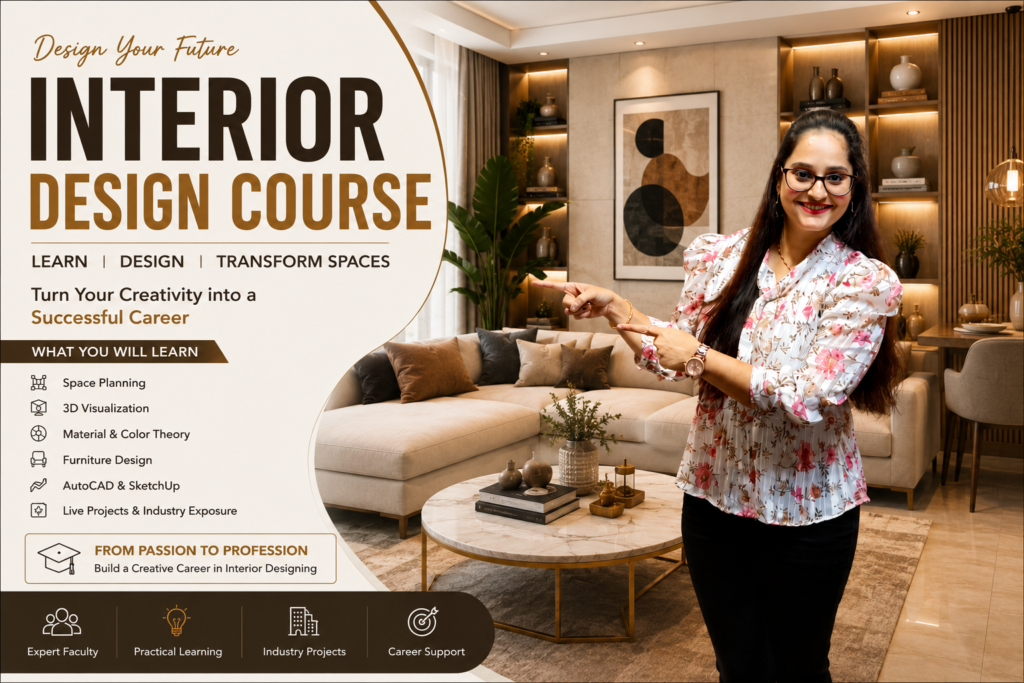
Introduction:
Bangalore has become one of India’s leading destinations for design education. With rapid growth in residential, commercial, and hospitality sectors, the demand for skilled interior designers continues to rise. Choosing the right institute is crucial for gaining practical knowledge, software expertise, industry exposure, and placement opportunities. Here are the top interior designing institutes in Bangalore for 2026.
Looking to build a career in other courses like Hotel Management? Explore in other cities Hotel Management course to learn about the curriculum, eligibility, and career opportunities.
If you are looking to build a creative career, enrolling in the best graphic design courses in Bangalore offers exceptional learning opportunities in India’s primary tech and creative hub.
These programs cover essential industry tools like Adobe Photoshop, Illustrator, and Figma alongside core principles like typography, branding, and UI/UX design.
By joining a top-rated graphic design institute in Bangalore, you gain practical, hands-on experience by working on real-world projects.
This structured training helps both beginners and professionals build a strong, job-ready portfolio that stands out to top employers.
With dedicated placement support and expert mentorship, taking a course in Bangalore is the ideal step to launch your career in visual communication.
Comparison Table: Top Interior Designing Institutes in Bangalore (2026)
| Institute | Address | Duration | Approx. Fees | Certification |
| Vikas Institute of Interior Design | Chamrajpet & Vijayanagar, Bangalore | 6 Months – 1 Year | ₹60,000 – ₹1,50,000 | Diploma / Certification |
| NID Bengaluru | Yeshwanthpur, Bangalore | 4 Years | ₹8 – ₹15 Lakhs | Degree |
| JD Institute of Fashion Technology | Brigade Road / JP Nagar | 1 – 4 Years | ₹1.5 – ₹6 Lakhs | Diploma / Degree |
| Vogue Institute of Art and Design | Richmond Circle | 1 – 4 Years | ₹1 – ₹9 Lakhs | Diploma / Degree / PG Programs |
| Bangalore School of Design | Bangalore | 1 – 4 Years | ₹1 – ₹5 Lakhs | Diploma / Degree |
| Eduleem School of Design | Koramangala | 1 Year | ₹50,000 – ₹1,50,000 | Diploma / Certification |
| DreamZone School of Creative Studies | Jayanagar | 6 Months – 2 Years | ₹50,000 – ₹2 Lakhs | Diploma / Certification |
| IIFA Multimedia | Banashankari | 6 Months – 3 Years | ₹75,000 – ₹3 Lakhs | Diploma / Degree |
| India Design Institute | Kalyan Nagar | 6 Months – 2 Years | ₹60,000 – ₹2 Lakhs | Diploma / Certification |
| NIF Global Bengaluru | HSR Layout | 1 – 3 Years | ₹1 – ₹4 Lakhs | Diploma / Degree |
1. Vikas Institute of Interior Design
Vikas Institute of Interior Design has established itself as a preferred destination for aspiring interior designers in Bangalore. The institute focuses on practical learning, industry-oriented training, and portfolio development. Students receive hands-on exposure through live projects, site visits, workshops, and software training in AutoCAD, SketchUp, and 3D visualization tools.
The curriculum covers space planning, furniture design, lighting concepts, material selection, color theory, and project management. One of the key strengths of the institute is its personalized mentoring approach, helping students develop both creative and technical skills. The institute caters to beginners, working professionals, and entrepreneurs seeking a career in interior design.
Students benefit from real-world exposure and guidance from experienced faculty members who bring industry insights into the classroom. The institute also emphasizes placement support and career readiness, making it a strong choice for those looking to enter the interior design industry.
2. National Institute of Design (NID) Bengaluru
NID Bengaluru is among India’s most respected design institutions. Known for its innovation-driven approach, the institute offers a strong foundation in design thinking, user-centered design, and creative problem-solving. Students learn through interdisciplinary projects that integrate aesthetics, functionality, and sustainability.
The institute provides access to advanced design labs, workshops, and research facilities. Students work on real-life projects that help them understand design challenges across various sectors. NID’s industry collaborations and strong alumni network further enhance learning opportunities.
Graduates from NID are highly sought after in design studios, architecture firms, product design companies, and creative consultancies. The institute is ideal for students seeking a prestigious design education with a strong emphasis on innovation and research.
3. JD Institute of Fashion Technology
JD Institute of Fashion Technology is one of India’s most recognized design schools. Its interior design programs combine creativity with technical knowledge. Students learn space planning, residential and commercial design, sustainable interiors, furniture design, and digital design tools.
The institute regularly organizes workshops, industry interactions, design competitions, and exhibitions. Students receive practical exposure through internships and live projects, helping them build a strong portfolio before graduation.
JD Institute’s curriculum is updated to meet current industry requirements, making graduates well-equipped for professional opportunities in the design sector.
4. Vogue Institute of Art and Design
Vogue Institute has earned a strong reputation for design education in Bangalore. The institute offers diploma, undergraduate, and postgraduate programs in interior design. Students gain expertise in design principles, architecture fundamentals, interior styling, and visualization software.
The institute places a strong emphasis on practical learning through studio work, design projects, and industry visits. Experienced faculty members guide students in developing innovative design solutions while maintaining functional and aesthetic balance.
Vogue’s industry partnerships and placement assistance make it a popular choice among design aspirants.
5. Bangalore School of Design (BSD)
Bangalore School of Design is known for its industry-focused curriculum and contemporary teaching methods. The institute emphasizes creativity, innovation, and practical learning. Students are trained in interior design concepts, software applications, visualization techniques, and project execution.
BSD encourages students to work on real projects and interact with professionals from the design industry. The institute’s focus on hands-on experience helps students develop confidence and professional competence.
Its strong industry connections and practical training modules have helped many graduates establish successful careers in interior design.
6. Eduleem School of Design
Eduleem School of Design has gained popularity for its flexible and career-focused interior design programs. The institute offers comprehensive training in design fundamentals, CAD software, 3D visualization, and project management.
Students benefit from practical assignments, live projects, internship opportunities, and placement support. The curriculum is designed to bridge the gap between academic learning and industry expectations.
Eduleem is particularly suitable for students looking for affordable and industry-oriented training with strong practical exposure.
7. DreamZone School of Creative Studies
DreamZone offers specialized interior design programs focused on creativity and employability. Students learn interior styling, space planning, material applications, furniture design, and digital visualization tools.
The institute follows a project-based learning approach, enabling students to build strong portfolios. Regular workshops, seminars, and industry interactions provide valuable insights into current market trends.
DreamZone is known for offering flexible learning schedules and career-oriented training for both students and working professionals.
8. IIFA Multimedia
IIFA Multimedia provides comprehensive interior design education with a blend of creative and technical training. The institute offers diploma, degree, and postgraduate programs designed to prepare students for professional practice.
Students gain expertise in design software, interior planning, visualization, and project execution. The institute also focuses on entrepreneurship skills, helping graduates start their own design practices.
IIFA’s industry-oriented curriculum and placement support make it a popular choice among aspiring designers.
9. India Design Institute
India Design Institute offers specialized programs in interior design with a focus on practical implementation. The curriculum includes residential design, commercial interiors, CAD applications, and design visualization.
Students work on industry-based projects and gain exposure to current design trends. The institute encourages innovation and creative problem-solving while maintaining strong technical foundations.
The combination of practical learning and mentorship helps students build a strong career path in interior design.
10. NIF Global Bengaluru
NIF Global Bengaluru is known for its industry-driven design education. The institute offers comprehensive interior design programs that cover conceptual development, design software, project management, and professional practice.
Students benefit from workshops, industry interactions, internships, and portfolio development activities. The curriculum is designed to equip learners with the skills required for today’s competitive design industry.
The institute’s focus on practical exposure and industry readiness makes it a strong option for aspiring interior designers.
Frequently Asked Questions (FAQs)
1. What is the eligibility for an Interior Designing Course in Bangalore?
The eligibility criteria vary depending on the course level. For certificate and diploma courses, most institutes require candidates to have completed their 10th or 12th standard. For bachelor’s degree programs in interior design, students must have passed 10+2 from a recognized board. Some institutes may also conduct entrance tests or interviews to assess creativity and design aptitude.
2. What is the duration of an Interior Designing Course in Bangalore?
Interior design courses are available in different formats. Certificate courses typically last between 3 to 6 months, diploma programs range from 6 months to 2 years, and bachelor’s degree programs generally take 3 to 4 years to complete. Students can choose a course based on their career goals and availability.
3. What software skills are taught in Interior Design courses?
Most reputed interior design institutes in Bangalore provide training in industry-standard software such as AutoCAD, SketchUp, 3ds Max, V-Ray, Photoshop, and Revit. These tools help students create floor plans, 3D visualizations, interior layouts, and professional design presentations.
4. What career opportunities are available after completing an Interior Design course?
Graduates can pursue careers as Interior Designers, Space Planners, Furniture Designers, Design Consultants, 3D Visualizers, Project Coordinators, Exhibition Designers, or Interior Styling Professionals. Many students also start their own interior design firms or work as freelance designers.
5. Which is the best Interior Designing Institute in Bangalore?
The best institute depends on factors such as curriculum, faculty, practical training, placement support, and budget. Some of the popular choices include Vikas Institute of Interior Design, NID Bengaluru, JD Institute of Fashion Technology, Vogue Institute of Art and Design, and Bangalore School of Design. Students should compare course content, fees, and industry exposure before making a decision.